
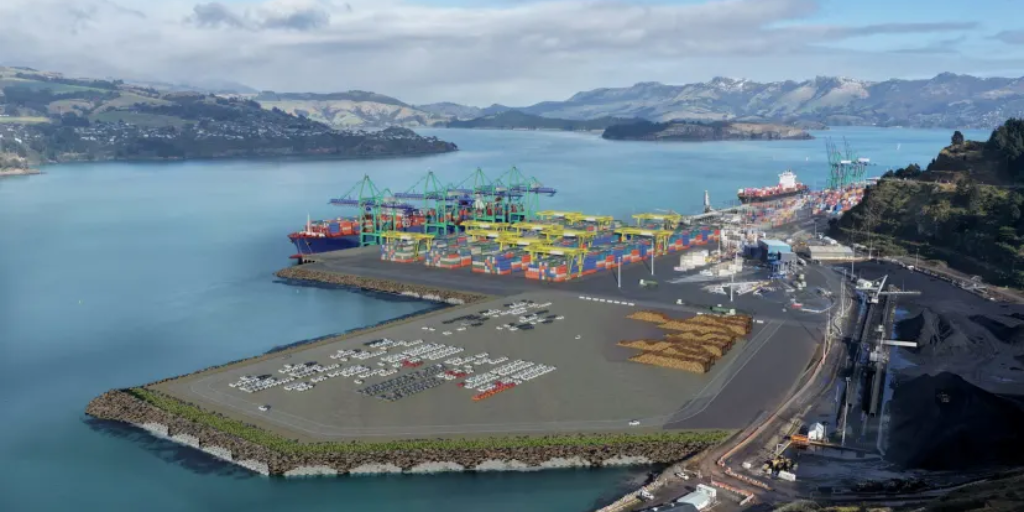
Lyttelton Port Confirms $821 Million Investment in Te Awaparahi Bay
Lyttelton Port Company (LPC) has confirmed an $821 million investment to build a new wharf and container terminal at Te Awaparahi Bay, a move set to strengthen the resilience and capacity of the South Island's key international trade gateway for decades to come.
Why Now?
LPC Chair Barry Bragg said the announcement reflects a decade of work rebuilding and strengthening the port following the Canterbury earthquakes, and marks a significant step in preparing for the next generation of South Island trade.
Christchurch City Holdings Limited (CCHL), which will contribute around $300 million in equity toward the project, approved the investment after seven months of due diligence into the project's strategic case, funding pathway, and long-term benefits. CCHL Chair Bryan Pearson said the decision reflects strong confidence in Christchurch, the South Island economy, and LPC's role as the region's key trade gateway.
What's Driving the Investment
According to LPC Chief Executive Graeme Sumner, ageing infrastructure, rising demand, larger vessels, and growing export volumes have created the right conditions to move forward. Two of the port's existing container berths, Cashin Quay 3 and 4, were damaged in the 2010/11 earthquakes and, while safe and usable now, would likely not remain viable after another major seismic event. Rebuilding them would take at least three years and significantly disrupt container operations, whereas building the new Te Awaparahi Bay terminal avoids that disruption altogether.
What's Being Built
The project will deliver:
- A 388-metre deepwater wharf, with future berth capacity
- A new 5-hectare container terminal
- Four new ship-to-shore cranes, alongside semi-automated gantry yard cranes
- Capacity to service vessels up to 15,000 TEU
- An annual berth capacity of around 850,000 TEU once complete
No further land reclamation is required beyond what's already underway, and the port is not expected to need its remaining reclamation consent before the 2040s, if at all.
Supporting the Workforce
LPC has confirmed the project isn't about reducing staff numbers, but about building the capacity, technology, and skills needed to remain the South Island's main import and export hub. While automation will change how some roles look, particularly in container handling and yard operations, it's also expected to create new, higher-skilled roles in areas like automation oversight, systems support, engineering, and data analysis. LPC says its approach will be people-centred and staged, with ongoing engagement with staff and unions as the project progresses.
Environmental Considerations
LPC has outlined a range of measures to manage environmental impacts during construction, including a Marine Piling Management Plan to protect Hector's dolphins, penguin detection protocols ahead of breakwater removal, sediment and noise monitoring, and a Sustainability Framework covering biodiversity, climate resilience, and waste reduction. Construction targets include 50% reuse of temporary works materials and 80% diversion of construction waste from landfill.
Funding and Timeline
The project will be funded through a mix of debt (led by LPC) and equity from CCHL, with no ratepayer funding involved. Customers will pay more to use the Lyttelton Container Terminal to support the investment, in exchange for a more efficient, resilient, and productive supply chain. Construction is expected to be complete by 2031.
Tune In: The Bold Company Podcast Season 2 - Now Live
Get inspired by the boldest voices in Canterbury business. Hosted by Business Canterbury’s Hannah Weeds and Ruffells’ Tim McInnes, The Bold Company Podcast shines a light on the innovators and changemakers shaping our region. Proudly supported by Christchurch Airport, ChristchurchNZ, and Ruffells Creative Studio.
🎙️ Listen now and meet the minds behind Canterbury’s success →

Browse Posts







- August 2026
- March 2026
- February 2026
- January 2026
- December 2025
- November 2025
- July 2025
- June 2025
- May 2025
- April 2025
- March 2025
- February 2025
- November 2024
- October 2024
- September 2024
- August 2024
- July 2024
- June 2024
- May 2024
- April 2024
- March 2024
- February 2024
- January 2024
- December 2023
- November 2023
Sign-up to Bold Company
Browse by topic
- News (70)
- Business success (33)
- Business growth (32)
- Podcast (21)
- Innovation (18)
- Tourism (16)
- Sustainability (11)
- Global trade (7)
- Opinion (7)
- Advocacy (6)
- Media Release (6)
- Workforce, Immigration & Employment (6)
- Manufacturing (5)
- Small business (5)
- Education, Skills and Training (4)
- QCBS (4)
- AI (2)
- Events (2)
- North Canterbury (2)
- Mid-Canterbury (1)
The Bold Company Podcast
The stories of Canterbury businesses and the people behind them...