



Business needs stability and a clear path to growth.

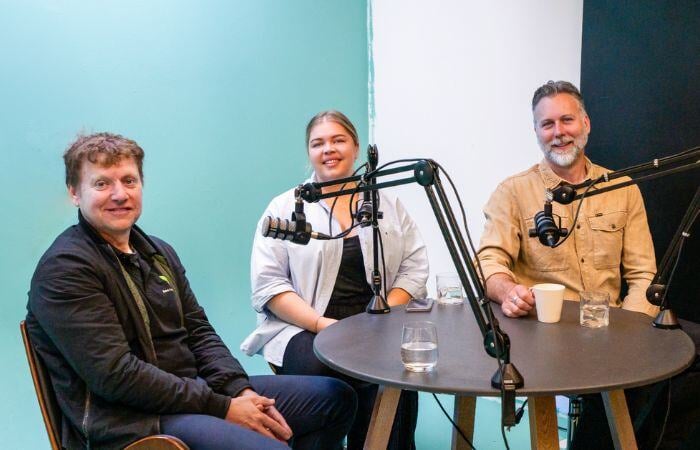
WATCH: former National MP Chris Penk, Business Canterbury's Leeann Watson and
NBR's political editor Brent Edwards joing the NBR Podcast
Businesses need stability, confidence and the right conditions to grow. As New Zealand waits for clarity following a closely contested election, those priorities must remain central to discussions about the next government.
Business Canterbury Chief Executive Leeann Watson joined host Simon Shepherd, former National Party minister Chris Penk and NBR political editor Brent Edwards on The NBR Podcast to discuss the election result and what comes next. While the conversation explored the complexities of MMP, special votes and potential governing arrangements, Leeann brought the focus back to the practical implications for business.
Her message was clear: whoever forms the next government needs to provide the conditions that enable businesses to grow and create jobs. Once special votes are counted, coalition negotiations need to move at pace, with economic growth underpinning those conversations.
Protecting business confidence
Leeann acknowledged that businesses have navigated significant uncertainty over recent years. In Canterbury and across the country, many have responded by focusing on what they can control within their own operations.
That approach will continue, but political uncertainty is not without consequences. Leeann warned that prolonged coalition negotiations could weaken both business and consumer confidence just as momentum has started to improve. The priority is to protect that progress and give businesses confidence to make decisions about their future.
Reducing red tape, supporting growth and creating the conditions for new jobs should sit at the centre of coalition discussions. For businesses managing costs and planning ahead, these are practical priorities that need attention regardless of the eventual government’s composition.
Political uncertainty, practical priorities
The wider discussion examined how split voting and overhang seats had shaped the preliminary result, alongside the potential influence of special votes and the Opportunity Party. Brent Edwards and Chris Penk also considered voter appetite for change, the challenges of forming a government and possible leadership implications.
Leeann highlighted the contrast between a potentially larger Parliament and a private sector working hard to reduce operating costs and lift productivity. She also cautioned that further leadership instability could add another layer of uncertainty at a time when businesses need reassurance.
For Canterbury businesses, the message coming through was consistent: keep focused on what you can control, while expecting political leaders to establish a stable platform for growth.
The outcome of negotiations remains uncertain. The needs of business are much clearer: timely decisions, less unnecessary complexity and an environment that supports confidence, employment and long-term growth.