




Succession Planning and Business Growth: Key Takeaways from Our Westpac Smarts Session
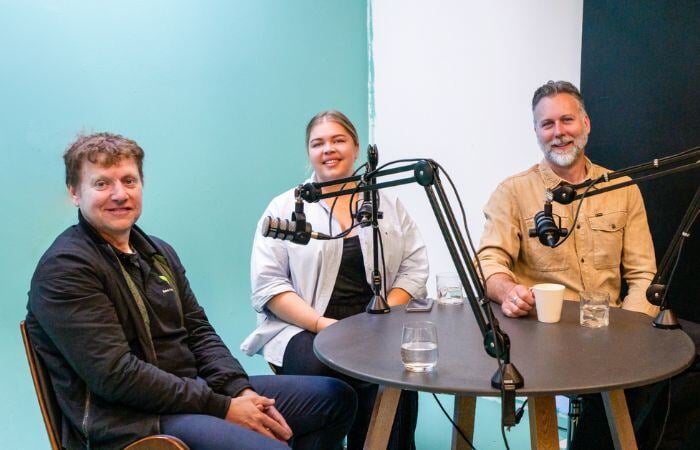
This week, Westpac partnered with Business Canterbury for a Westpac Smarts session on succession planning and business growth. Greg Allnutt (Pivot and Pace) opened with insights on succession, followed by Dorian Crighton (Baker Tilly Staples Rodway) on growth fundamentals.
The key message across both: business owners consistently leave planning too late, and that delay costs them, both in business value and in the options available when they finally decide to move.
Succession Is a Process, Not an Exit Event
The clearest message from Greg Allnutt's presentation was that succession isn't a single event, it's an ongoing process. Business owners consistently delay planning because they measure their own readiness rather than building steadily toward an outcome.
The takeaway was blunt: ambivalence produces bad landings.
Finding (and Developing) the Right Successor
Whether recruiting externally or developing talent internally, three qualities were flagged as non-negotiable in a successor:
- Aspiration – genuinely wanting the role and understanding what it demands, not just the title or income that comes with it.
- Ability – the competencies required to perform at the next level and add value beyond the existing role.
- Agility – the capacity to learn, adapt, and do things differently.
Cultural fit matters just as much. Using a values-performance matrix, Greg illustrated the risk of promoting high performers who don't align with company culture, warning that placing someone in charge without testing values alignment first can, in his words, "kill" the business.
Understanding Your Exit Options
Several exit pathways were discussed:
- Strategic buyers pay for market position and future potential, not just historical earnings.
- Financial buyers are focused on return on a portfolio investment.
- Management buyouts are becoming harder in professional services, as potential partners are often reluctant to take on financial exposure alongside existing personal debt.
- Management buy-ins, where an external, entrepreneurial candidate phases into ownership over time, were presented as an underused but valuable option.
- Private equity remains viable but demanding, typically requiring hypergrowth and a return within three to four years.
- Building a business that generates income without requiring the owner's day-to-day presence, held through a family trust, was also raised as a legitimate and often overlooked outcome.
Growth Starts With Knowing Your Numbers
Dorian Crighton opened with a clear warning: unplanned growth is often the most damaging kind, since it can consume cash faster than a business can generate it.
He outlined a bottom-up budgeting approach, starting with what you want to earn, then working backward through overheads and gross margin to determine the revenue required to get there. As he put it, the numbers don't lie, illustrated by a client who was convinced the economy had destroyed his business, when in fact his financials showed his best year in seven.
Seven ways to grow a business were shared, including increasing transaction value, improving conversion rates, raising transaction frequency, and focusing on an ideal client profile rather than chasing every opportunity. Each lever connects directly back to maximising business value at the point of exit.
Missed this event, or keen to see what's coming up next? Explore our upcoming events and training schedule here.
Proudly brought to you, and supported by: