






Reserve Bank Lunch 2026: Economic Outlook, Inflation and Regional Growth in Focus
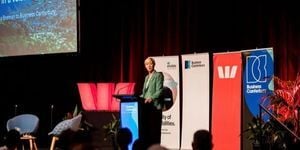
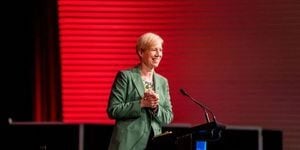
Business leaders gathered for our annual Reserve Bank Lunch to hear from Dr Anna Breman, Governor of the Reserve Bank of New Zealand, in her first formal speech delivered in New Zealand and her first visit to Canterbury.
A Milestone Event for Canterbury
Business Canterbury hosted its annual Reserve Bank Lunch, bringing together business leaders from across the region to hear directly from Dr Breman, Governor of the Reserve Bank of New Zealand.
Marking her first formal address first speech in the South Island in her first visit to Canterbury, the Governor’s appearance gave the event added significance. Now in its 30th year, the lunch continues to serve as one of the region’s most important forums for direct insight into monetary policy, economic conditions and financial stability.
Hosted by Leeann Watson and joined by Morgan Simmons of Westpac, the event reinforced the value of direct dialogue between policymakers and the local business community.
Business leaders from across Canterbury gathered for the 2026 Reserve Bank Lunch.




Forward-Focused Monetary Policy in Practice
Governor Breman outlined why the Reserve Bank takes a forward-looking approach to monetary policy rather than responding purely to current data.
She emphasised that monetary policy operates with significant time lags — typically taking six to nine quarters before interest rate changes reach their peak impact on economic activity. That means the effects of the 2.25% OCR reductions implemented over the past 18 months will continue to flow through the economy this year.
Economic data itself is often backward-looking and volatile. Key indicators such as GDP are released with delay, making forward guidance essential for providing clarity to financial markets and reducing unnecessary volatility.
While the Reserve Bank relies on central projections under normal conditions, the Governor noted that periods of extreme uncertainty — such as global crises or major shocks — require more scenario-based forecasting and a heavier reliance on real-time assessment.
Economic Conditions: Growth Returning, But Uneven
After several years of subdued performance, projections point to a more positive growth environment ahead.
Canterbury’s labour market remains comparatively strong, with unemployment sitting at 3.7% — well below the national average. Job advertisements across the region have increased significantly, reflecting renewed business activity and hiring demand.
Agriculture is performing strongly, supported by high-quality export production, while manufacturing is also showing signs of improvement. However, the recovery is not uniform across sectors or regions.
Household spending remains cautious, and wage growth has been moderate. The Reserve Bank believes spare capacity still exists within the economy, meaning expansion can occur without immediately generating inflationary pressure.
That balance — growth without overheating — remains central to current policy settings.
On inflation and mandate
“Low and stable inflation remains the foundation for long-term economic stability.”
Inflation and the Path Back to Target
Inflation currently sits at 3.1%, above the Reserve Bank’s target midpoint but broadly consistent with expectations.
The Governor expressed confidence that inflation will return to the 2% target within the next 12 months. Core inflation measures remain contained, and inflation expectations among households have continued trending downward.
Some upward pressure has come from administrative price changes — including regulated fees and rates — rather than broad-based demand-driven inflation. Meanwhile, price categories most sensitive to interest rates have already moderated significantly.
Global food prices remain an important consideration for New Zealand, given the country’s role as a major food exporter. As prices are largely determined in international markets, domestic conditions are closely tied to global supply dynamics and external shocks.
Regional Variation and Housing Dynamics
A recurring theme in the discussion was regional variation.
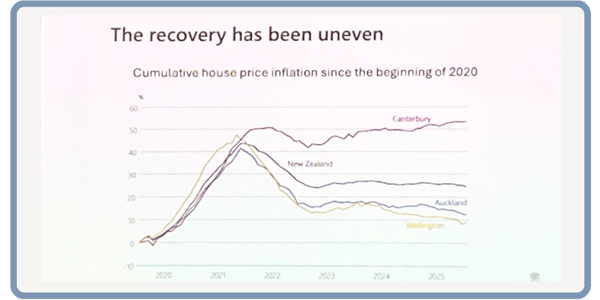
While Auckland and Wellington have experienced more challenging housing and economic conditions, Canterbury appears comparatively well positioned. National house prices have been relatively flat following the post-pandemic correction, yet local market dynamics differ significantly across the country.
The Governor highlighted that housing wealth effects play an important role in household consumption patterns. As labour markets strengthen and broader economic momentum builds, housing activity may gradually follow — though recovery is expected to remain uneven.
Resilience, Global Risk and Financial Stability
Global uncertainty continues to shape the outlook.
Geopolitical tensions, supply chain disruptions and extreme weather events can create short-term volatility in inflation and output. However, the Reserve Bank noted that temporary shocks typically reverse over time.
More severe events — such as major climate-related disasters — require deeper resilience within the financial system. As prudential regulator for banks and insurers, the Reserve Bank maintains a strong focus on ensuring institutions can withstand stress and protect depositors.
New Zealand’s export base remains both a strength and an exposure. As a nation that feeds millions globally, domestic pricing is closely linked to international food markets, reinforcing the importance of stability in monetary policy.
Questions from the Floor
Q&A Highlights
The audience engaged in a wide-ranging discussion covering policy, productivity, resilience and even rugby.
-
On Household Spending Risk - The most immediate downside risk to projections is continued cautious household behaviour. While growth momentum is building, confidence remains fragile for some households.
-
On Inflation Expectations - The Governor acknowledged recent scrutiny of the Reserve Bank but expressed confidence in the institution’s capability and commitment to transparency. Delivering on the 2% target is central to maintaining public trust.
-
On Productivity and Innovation - While the Reserve Bank’s primary tool is monetary policy, maintaining low and stable inflation creates the conditions for investment and long-term productivity growth. Broader reforms to support competition and innovation sit beyond the Bank’s direct mandate.
-
On Central Bank Digital Currency - The Reserve Bank has explored CBDC, but current priority lies in modernising payment systems more broadly.
-
On Currency Movements - Recent appreciation in the New Zealand dollar reflects global movements, particularly a softer US dollar. The current level is viewed as broadly near fair value.
Looking Ahead
The Reserve Bank’s latest OCR decision to hold at 2.25% reflects balanced risks. While inflation is expected to return to target, global uncertainty and household caution remain key watchpoints. For Canterbury businesses, the message was cautiously optimistic: growth is returning, inflation pressures are easing, and the region is well-positioned — provided momentum continues.
Additional Resources
-
Read the Reserve Banks latest Monetary Policy Statement for February.
-
Details of the Reserve Bank Governor's speech can be found here.
-
Download full speech and presentation in PDF.
Continuing the Conversation
Events like the Reserve Bank Lunch are part of Business Canterbury’s broader programme connecting business leaders with national decision-makers and global thinkers.
From major economic briefings to sector-specific forums and leadership development, our events are designed to inform, challenge and equip Canterbury businesses for what’s ahead. Explore upcoming events →