




Fuel Cost Pressures: Practical Ways to Support Staff
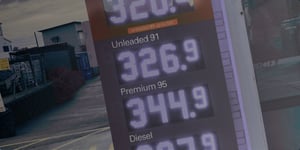
Business Canterbury is acutely aware of the impact that rising fuel prices—linked to the Middle East crisis—are having on businesses and their employees, creating significant cost pressures. Below are some practical tips to assist staff in managing the impact of rising fuel prices.
Here's our top tips
|
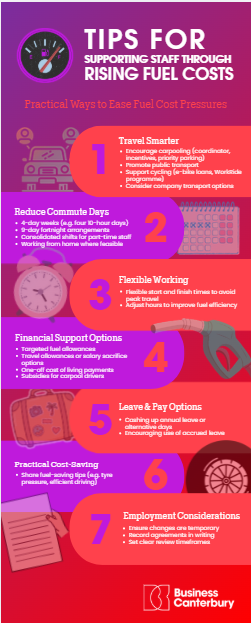
1. Encourage carpooling. Designate an employee to act as a transport coordinator. Provide a subsidy and allocate preferential parking for carpoolers.
2. Where staff have company vehicles, investigate the feasibility of picking up employees to and from work.
3. Offer staff the option of cashing in outstanding annual leave or alternative days.
4. Direct staff to take annual leave where leave balances have built up.
5. Consider four 10-hour days to reduce travel costs.
6. Build a nine-day fortnight arrangement where feasible.
7. Consolidate shifts for part-time staff to reduce travel frequency.
|
8. Allow flexible start and finish times to avoid peak travel and improve fuel efficiency.
9. Provide bicycle or e-bike loan options (FBT exempt for commuting e-bikes).
10. Promote public transport usage.
11. Consider salary sacrifice or travel allowances.
12. Share fuel-saving tips (e.g. tyre pressure, driving efficiency).
13. Consider targeted fuel allowances.
14. Offer one-off cost of living payments where appropriate.
15. Enable working from home where feasible.
|
Check out WorkRide – NZ’s Ride to Work Benefit Program: 32–63% offset, visit www.workride.co.nz to learn more.
NOTE: Any changes to employment terms and conditions should be temporary, recorded in writing, and time-limited (for example, one month). This allows for developments in the Middle East crisis and any diplomatic efforts to stabilise the region.
You can download a shareable infographic summary of these tips here.