

As artificial intelligence (AI) becomes more common in business, many Canterbury organisations are moving beyond experimentation and focusing on practical applications that support day-to-day work. With ongoing pressure on time, resourcing, and delivery, small and medium-sized businesses are increasingly looking for ways AI can make a tangible difference.
For Canterbury-based consultancy e2e ltd, this has meant applying AI to reduce manual effort in scope-of-work creation.
At e2e, AI is now used across multiple parts of the business to reduce manual effort, with the scope-of-work workflow being one practical example.
Scopes of work are critical documents. They define project boundaries, set expectations, and underpin delivery. At e2e, these scopes commonly relate to job management systems used by trade and service-based businesses, where clear definition of workflows and responsibilities is essential.
The e2e team identified scope creation as an area that was highly structured and repeatable yet still relied heavily on experience and judgement. Working collaboratively, the business developed an internal AI workflow designed to support the process rather than replace it.
The workflow uses structured inputs such as discovery notes and client questionnaires, alongside predefined delivery standards, to generate a structured first draft of a scope of work. This provides a consistent starting point for repeatable elements of projects, while allowing room for client-specific detail.
Importantly, the AI does not make decisions or finalise documents. All outputs are reviewed by the team, with human oversight remaining central to the process.
According to Stefanie Wah, Operations Manager at e2e ltd, the value of the approach lies in how it fits into existing ways of working.
“We weren’t looking to reinvent how we scope projects,” she says. “The aim was to reduce repetition and create a consistent starting point, so the team can focus more on refining scope and addressing project-specific nuances.”
Since introducing the workflow, e2e has reduced the time required to produce scopes of work and decreased rework during internal review. In practical terms, this has freed up time for client conversations, delivery planning, and addressing potential issues earlier in the project lifecycle.
One team member noted that having a consistent starting point has “reduced the pressure and back-and-forth involved in scope creation, particularly when managing multiple projects at once.”
For other Canterbury businesses considering AI, e2e’s experience highlights the importance of intent and structure. AI is most effective when applied to well-defined, rules-based tasks and supported by clear standards and human judgement. In this case, the result has been a quieter but meaningful improvement, helping turn discovery notes into delivery-ready scopes more efficiently, while keeping people firmly in control of the outcome.
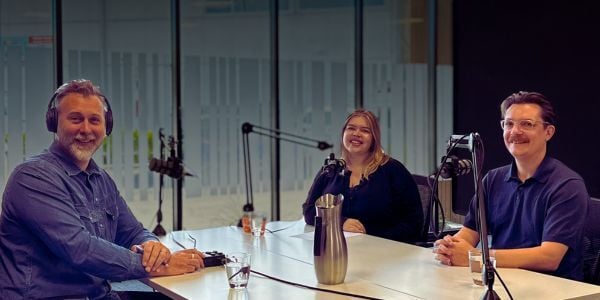
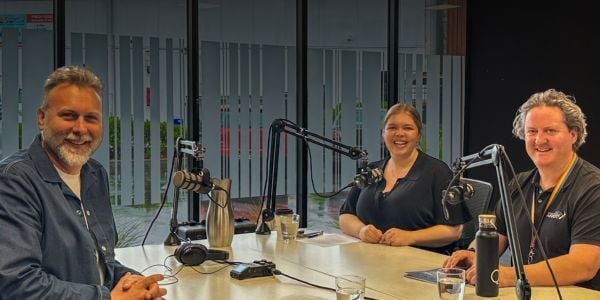
Tune In: The Bold Company Podcast Season 2 - Now Live
Get inspired by the boldest voices in Canterbury business. Hosted by Business Canterbury’s Hannah Weeds and Ruffells’ Tim McInnes, The Bold Company Podcast shines a light on the innovators and changemakers shaping our region. Proudly supported by Christchurch Airport, ChristchurchNZ, and Ruffells Creative Studio.
🎙️ Listen now and meet the minds behind Canterbury’s success →
Browse Posts




Sign-up to Bold Company
Browse by topic
- News (70)
- Business success (33)
- Business growth (32)
- Podcast (21)
- Innovation (18)
- Tourism (16)
- Sustainability (11)
- Global trade (7)
- Opinion (7)
- Advocacy (6)
- Media Release (6)
- Workforce, Immigration & Employment (6)
- Manufacturing (5)
- Small business (5)
- Education, Skills and Training (4)
- QCBS (4)
- AI (2)
- Events (2)
- North Canterbury (2)
- Mid-Canterbury (1)
The Bold Company Podcast
The stories of Canterbury businesses and the people behind them...